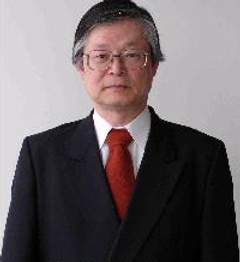
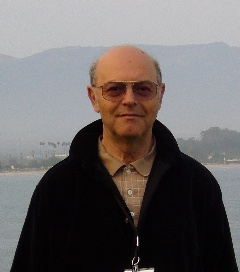
Yoshihiro Akiyama is Professor, the graduate school of Kyushu Institute of Technology (KIT).
He is also SEI authorized Instructor for PSP/TSP and CMMI, a TSP coach, and a SCAMPI High
Maturity Lead Appraiser. Before he retired from IBM Japan in October 2006, he was a program
manager or Senior Technical Staff Member, promoting process-based project management for IBM
Asia Pacific global services organizations since 1998. During 1983 through 1997, he was dedicated
to do research on software engineering at IBM Tokyo Research Laboratory, Systems Laboratory, and
Kanazawa Institute of Technology. During 1980 to 1986, he had chances to work at IBM system
software development laboratories in California and New York. He joined IBM Japan 1974 after
receiving Ph.D. in particle Physics March 1974. He is a member of IEEE, ACM, PMI, IPSJ, and SPM
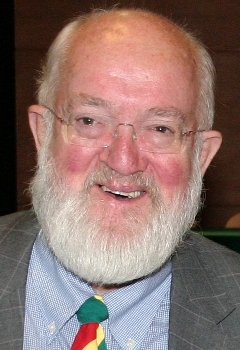
Dr. Victor R. Basili is Professor of Computer Science at the University
of Maryland, College Park and Executive Director of the Fraunhofer
Center - Maryland. He was and one of the founders and principals in the
Software Engineering Laboratory (SEL) at NASA/GSFC. He works on
measuring, evaluating, and improving the software development process
and product.
He worked on the development of mechanisms for observing
and evolving knowledge through empirical research, e.g., the
Goal/Question /Metric Approach, The Quality Improvement Paradigm, the
Experience Factory. He is a recipient many awards including a 1989 NASA
Group Achievement Award, a 1990 NASA/GSFC Productivity Improvement and
Quality Enhancement Award, the 1997 Award for Outstanding Achievement in
Mathematics and Computer Science by the Washington Academy of Sciences,
the 2000 Outstanding Research Award from ACM SIGSOFT and the 2003 Harlan
Mills Award for the IEEE Computer Society.
Dr. Basili has authored over
200 papers, has served as Editor-in-Chief of the IEEE TSE, and as 1982
Program Chair and 1993 General Chair of ICSE, respectively. He is
co-editor-in-chief of the International Journal of Empirical Software
Engineering. He is an IEEE and ACM Fellow. He received his Ph.D. in
Computer Science from the University of Texas in 1970.
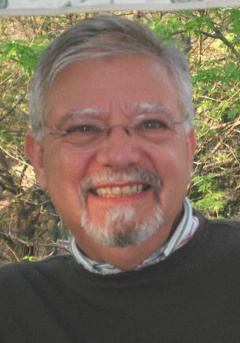
Dr. Paul Clements is a senior member of the technical staff at
Carnegie Mellon University's Software Engineering Institute,
where he has worked for 8 years leading or co-leading projects
in software product line engineering and software architcture
documentation and analysis.
Clements is the co-author of three practitioner-oriented books
about software architecture: "Software Architecture in Practice"
(1998, second edition due in late 2002), "Evaluating Software
Architectures: Methods and Case Studies" (2001), and "Documenting
Software Architectures: View and Beyond" (2002). He also co-wrote
"Software Product Lines: Practices and Patterns" (2001), and was
co-author and editor of "Constructing Superior Software" (1999).
In addition to these five books, Clements has also authored dozens of
papers in software engineering reflecting his long-standing interest
in the design and specification of challenging software systems. He
received a B.S. in mathematical sciences in 1977, and a M.S. in
computer science in 1980, both from the University of North Carolina
at Chapel Hill. He received a Ph.D. in computer sciences from the
University of Texas at Austin in 1994.
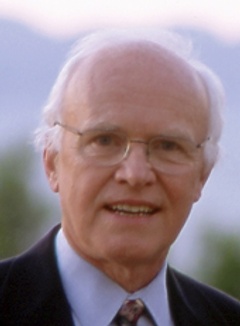
Tom DeMarco is a Principal of the Atlantic Systems Guild, a systems think tank with offices in
the U.S., Germany and Great Britain. He is a past winner of the Jean-Dominique Warnier Prize for
"lifetime contribution to the information sciences." He is a founder and past-president of the
Pop!Tech Conference.
Mr. DeMarco is the author of nine books on management, organizational design, and systems
development. The most recent is called Waltzing With Bears: Managing Risk on Software Projects,
written with co-author Tim Lister. (If you think waltzing with a bear is risky, try managing a
software project.) Before that there was Slack: Getting Past Burnout, Busywork, and the Myth of
Total Efficiency, published by Random House, Broadway Books Division, in 2002. It addresses the
question, Why are we all so damned busy? and offers some unsettling answers.
In 1997, he wrote The Deadline: A Novel About Project Management [Dorset House Press], the story
of a veteran software manager who finds he has bet his life on a project deadline. The book is
about managing as though your life were on the line. Mr. DeMarco's earlier works include Why
Does Software Cost So Much? (And Other Puzzles of the Information Age) [Dorset House, 1995], the
classic, PEOPLEWARE: Productive Projects and Teams (with co-author Tim Lister) now in a second
edition [Dorset, 1999], Controlling Software Projects: Management, Measurement and Estimation,
[Prentice Hall, 1982], Structured Analysis and System Specification [Prentice-Hall, 1979], and
more than one hundred articles and papers about management and the system development process.
Mr. DeMarco's career began at Bell Telephone Laboratories where he served as part of the
now-legendary ESS-1 project. In later years, he managed real-time projects for La CEGOS
Informatique in France, and was responsible for distributed on-line banking systems installed
in Sweden, Holland, France and Finland. He has lectured and consulted throughout the Americas,
Europe, Africa, Australia and the Far East.
Mr. DeMarco has a BSEE degree from Cornell University, an M.S. from Columbia University, a
diploma from the University of Paris at the Sorbonne, plus an honorary Doctor of Science from
City University London (2003). In 1999 he was elected a Fellow of the IEEE. He is the winner of
the 1999 Stevens Award for his contribution to software engineering methods. His first work of
mainstream fiction, a comic novel called Dark Harbor House, was published by Down East Books in
the Spring of 2001. His short story collection, Lieutenant America and Miss Apple Pie was
published in 2003. He makes his home in Camden, Maine.
Richard A. DeMillo is the Imlay Dean and Distinguished Professor of Computing at the Georgia
Institute of Technology. He is also Director of Georgia Tech's Information Security Center.
He returned to academia in 2002, after a career as an executive in industry and government.
He was Chief Technology Officer for Hewlett-Packard, where he had worldwide responsibility
for technology and technology strategy. Prior to joining HP, he was in charge of Information
and Computer Sciences Research at Telcordia Technologies (formerly Bellcore) in Morristown,
New Jersey, where he oversaw the development of many Internet and web-based innovations. He
has also directed the Computer and Computation Research Division of the National Science
Foundation.
Before joining industry during the height of the Internet boom, he was Professor of Computer
Sciences and Director of the Software Engineering Research Center at Purdue University. He
also held major faculty positions at Georgia Tech where he was the founding Director of the
Software Research Center and a visiting professorship at the University of Padua in Padua,
Italy.
The author of over 100 articles and books, Dr. DeMillo's research has spanned several
fundamental areas of computer science and includes fundamental innovation in computer
security, software engineering and mathematics. His present research interests are focused
on information security and nanotechnology. He is developing hardware-based architectures
for trusted computing platforms. He is also working on computing and communication
architectures for massively distributed nano-scale components.
He is active in many aspects of the IT industry, serving on advisory boards and panels and
he is a member of the Boards of Directors for several companies.
János Fehéregyházy was born in Budapest and has lived in Austria since 1956. After
graduating from the Technical University of Vienna in Telecommunications he
joined Siemens AG Austriain 1977, where he worked in the Program and System
Engineering (PSE) department, mainly on the development of software for Siemens
digital switching systems. In 1999 he became head of a business unit leading projects
related to Intelligent Network Systems. In 2001 he became CEO of Siemens PSE Ltd. in
Hungary, a subsidiary of PSE in Austria. Siemens PSE Ltd. is the largest software
development company in Hungary, employing more then 700 software and systems engineers.
Since April 2005 János has been responsible for the regional strategy of the entire PSE
Group, including development sites in 6 Central and Eastern Europe countries,
Turkey and China.
Dr. Donald F. Ferguson is one of 55 active IBM Fellows, IBM's highest technical position,
in IBM's engineering community of 200,000 technical professionals. There have been
approximately 200 Fellows in IBM's history.
Don is the Chief Architect and technical lead for IBM's Software Group (SWG) family of
products, and chairs the SWG Architecture Board. This board includes the chief architects
for DB2, Lotus, Rational, Tivoli and WebSphere products.
Don's most recent efforts have focused on
Web services implementation in IBM products, and the definition of standards
Simplified application development and tools, and support for patterns, templates and recipes
SWG product support for information integration, content management, application integration and event management
Scalability and high availability
Business process management
Grid services
Client, mobile and embedded platforms
Componentization and integration of the SWG product family
Portal and Web service based approaches to systems and application management
Anton (Tony) Fricko has worked with IBM since 1971 in several international roles in Europe,
joining the UK Hursley Laboratories in 1999. His current role is Program Manager for jStart
Emerging Technologies, where he assists customers all over Europe in the adoption of new
technologies, focusing on Web Services, SOA and Autonomic Computing as well as OSS, Ajax
and Web 2.0 technologies. Since 2004 Tony performs this function from his home town Vienna,
Austria.
Between 1975 and 1987 he was working at the BBC Brown Boveri AG, Baden as Programmer,
Project Leader, Quality Manager, Manager. His application area was: Power system control.
Since 1987 he has been working at INFOGEM AG, Informatiker Gemeinschaft für Unternehmensberatung
in Baden. He is a Co-founder, President, Senior Consultant. His field of activities are
Consultancy and education in software engineering, especially project
and quality management.
He was General Chairman of the Fourth European Conference on Software
Quality, Basel, 1994; Programme Committee member of a number of European
and World Conferences on Software Quality; Member of the Editorial Review
Board of the ASQ journal Software Quality Professional; Co-author of two
books and author of more than 50 contributions to conferences and journals.
He is Founder of the BridgeGuard Art & Science Residence Centre in túrovo (Slovakia).
Yuri Gurevich is a Principal Researcher at Microsoft. He is also Professor Emeritus at the University
of Michigan, ACM Fellow, Guggenheim Fellow, and Dr. Honoris Causa of Hasselt University in Belgium and
of Ural State University in Russia.
Stephen Hailes is a senior lecturer in the department of Computer Science, University
College London. He holds both undergraduate and PhD degrees from Cambridge University,
the latter in the field of distributed object-based systems. Since leaving Cambridge,
he has worked at UCL, primarily in the fields of networking and security; thus he was
the first to give public demonstrations of multimedia conferencing over packet based
networks in the UK, and the first to demonstrate interworking with circuit switched
systems. Latterly Stephen has focussed his efforts on mobile systems, and security. He
has been PI or CoI on a range of national and EC-funded projects, including the
successful EC-funded 6WINIT (mobile IPv6 systems for healthcare) project. He is
currently PI on the MARS project, examining the use of AI-techniques in producing
secure, robust, systems, and is CoI on the recently awarded Framework 6 Integrated
Project SEINIT, examining techniques for the construction of secure IPv6-based
ambient systems.
Emeritus Professor of Computing, Oxford University Computing Laboratory Senior Researcher with
Microsoft Research in Cambridge.
Tony Hoare's interest in computing was awakened in the early fifties, when he studied philosophy
(together with Latin and Greek) at Oxford University, under the tutelage of John Lucas. In 1959,
as a graduate student at Moscow State University, he studied the machine translation of languages
(together with probability theory, in the school of Kolmogorov). To assist in efficient look-up
of words in a dictionary, he discovered the well-known sorting algorithm Quicksort.
On return to England in 1960, he worked as a programmer for Elliott Brothers, a small scientific
computer manufacturer. He led a team (including his later wife Jill) in the design and delivery
of the first commercial compiler for the programming language Algol 60.
In 1977 he moved to Oxford University, and undertook to build up the Programming Research Group,
founded by Christopher Strachey. The research of his teams at Oxford pursued an ideal that takes
provable correctness as the driving force for the accurate specification, design and development
of computing systems, both critical and non-critical. Well-known results of the research include
the Z specification language, and the CSP concurrent programming model.
Throughout more than thirty years as an academic, Tony has maintained strong contacts with
industry, through consultancy, teaching, and collaborative research projects. He took a
particular interest in the sustenance of legacy code, where assertions are now playing a vital
role, not for his original purpose of program proof, but rather in instrumentation of code for
testing purposes. On reaching retirement age at Oxford, he welcomed an opportunity to go back to
industry as a senior researcher with Microsoft Research in Cambridge. He hopes to expand the
opportunities for industrial application of good academic research, and to encourage academic
researchers to continue the pursuit of deep and interesting questions in areas of long-term
interest to the software industry and its customers.
Watts S. Humphrey founded the Software Process Program of the Software Engineering Institute at
Carnegie Mellon University. He is a Fellow of the Institute and is a research scientist on its staff.
From 1959 to 1986, he was associated with IBM Corporation, where he was director of programming and
VP of Technical Development. His publications include many technical papers and eleven books. Some of
his recent books are), Managing Technical People (1996), Winning With Software: An Executive Strategy
(2001), PSP: A Self-Improvement Process for Software Engineers (2005), TSP: Leading a Development Team
(2006), and TSP, Coaching Development Teams (2006). He holds five US. Patents. In 1991 he served on the
Board of Examiners for the Malcolm Baldridge National Quality Award. He holds a bachelor's degree in
physics from the University of Chicago, a master's degree in physics from the Illinois Institute of
Technology, and a master's degree in business administration from the University of Chicago.
Mr. Humphrey was awarded an honorary Ph.D. degree in software engineering by Embry Riddle Aeronautical
University in 1998. In 2000, the Watts Humphrey Software Quality Institute in Chennai, India was named
in his honor and the Boeing Corporation presented him with an award for innovation and leadership in
software process improvement. In 2005, at the White House, the President of the United States awarded
Mr. Humphrey the National Medal of Technology.
Henry W. (Hank) Jones, III is a software business consultant and lawyer with extensive open
source software (OSS) experience. He is a 25-year veteran of the software and information
technology industries. Hank has served on the senior management teams of 3 publicly traded
U.S. technology vendors in blended legal, business development, and technology leadership
roles. He consults to software and other technology vendors and users re. OSS strategy,
benefits, risks, product management, adaptation, licensing, intellectual property, and
training. Hank also handles traditional (i.e., non-OSS) software development, distribution,
sales/licensing, risk management, dispute, and other projects. Hank presently maintains
technology law and consulting practices, based in Austin, Texas, U.S. (but working globally),
working as memphishank@aol.com.
Hank has chaired and spoken OSS events and panels since 1999, including at the OSBC
conference in San Francisco and the Austin Software Council. He initiated and co-chaired
the 12/11/03 SDForum "Open Source Summit" in Burlingame, California (Silicon Valley). At
the University of Texas, he has served as adjunct lecturer in software engineering
continuing education programs.
Magnus Karlson is an Expert in Open Systems Software Architecture at Ericsson AB in Group Function
Technology, Common Technologies. His work is concentrated on standardization and strategies within
the platform area. Mr. Karlson has participated in several different standardization initiatives
and open source related activities in the last few years. He is currently chair of the SA Forum
Technical Work Group as well as a board member. Mr. Karlson is also chairman of the SCOPE Alliance
board. He holds a B.S. in system analysis from the University of Stockholm, Sweden.
Allan Kennedy is the founder of Kennedy Carter Ltd. With his colleagues, he has been
a pioneer of executable modelling applied to embedded and real time system development.
Kennedy Carter's Executable UML modelling and simulation environment (iUML) was recently
selected by the US DoD's Single Integrated Air Picture Systems Engineering Task Force
(SIAP SE TF) as their platform independent UML modelling tool. The SIAP SE TF is building
an Executable UML model of a distributed system that supports joint tactical battle
management and command and control.
Kouichi Kishida is a Fellow of SRA (Software Research Associates, Inc), a Tokyo-based
independent software house, and now serving as the Technical Director of
SRA Key Technology Laboratory, the company's R&D Lab.
Kishida started his professional career in early 1960s first as a freelance programmer.
After worked for a few companies, he founded SRA with some of his friends in November 1967.
In early 1970s, his name became famous in Japan as the inventor of unique structured program
design technique and also as the author of the first book on systems programming in Japanese.
Summer 1980, SRA introduced BSD Unix on VAX780 as the basis of software development environment
of the company. It was the starting point of Unix revolution in Japan. Kishida was nominated as
the leader of the 1st Unix-based national software environment project called "SMEF" (1981-85).
Then he had a big political trouble against the government about the planning of the successor
project SIGMA (See "Interview with Kouichi Kishida", Unix Review Magazine, February 1987).
Kishida has been very active in voluntary activities in Japanese software community. He is a
founding member and serving as the Secretary General of Software Engineers Association since 1985,
and also supporting some other organizations like Japan Unix Society (JUS), Software Maintenance
Study Group (SMSG), Japan SPI Consortium (JASPIC), etc.
Internationally, Kishida has been involved in ICSE community from late 1970s. After serving as a
PC member, he took the Program Co-Chair position of 9th ICSE (Monterey, 1987) , gave a keynote
speech at 10th ICSE (Singapore, 1988). He was given ACM/SGSOFT Distinguished Service Award in 2001.
As the Secretary General of SEA Japan, he has been organizing a series of annual international
technical symposium in China since 1987 (China-Japan Symposium:1987-90, International CASE Symposiums:
1991-95, International Symposium on Future Software Technology: 1996-2004, International Workshop on
Future Software Technology: 2005- ). And now he is serving as the Chair of Far East Experience Track
of ICSE 2006 in Shanghai.
Hermann Kopetz received his PhD in physics "sub auspiciis praesidentis" from the University
of Vienna, Austria in 1968. He was a manager of a computer process control department at
Voest Alpine in Linz, Austria, before joining the Technical University of Berlin as a
professor for Computer Process Control in 1978. Since 1982 he is professor for Real-Time
Systems at the Technical University of Vienna. Dr. Kopetz's research interests focus at
the intersection of real-time systems, fault-tolerant systems, and distributed embedded
systems. He is the chief architect of the Time-Triggered Architecture which evolved over
the past twenty years of research.
As an engineer and businessman, he is the Founding Chairman of TTTech, with one of his
best students as the CEO. TTTech is the right example to show how original ideas can
lead to successful enterprises.
As to professional activities, from 1990 to 1992 he was chairman of the IEEE Technical
Committee on Fault-Tolerant Computing and was elected to the grade of a "Fellow of the
IEEE" in 1993. Dr. Kopetz was the Chairman of the IFIP WG 10.4 on Dependable Computing
and Fault-Tolerance from 1996 to 1998. In 1998 he was elected to become a full member
of the Austrian Academy of Science. In July 2000 Dr. Kopetz was nominated by the Austrian
Government to become one of the eight scientists that advise the Government on Science Policy.
Frank Leymann is an IBM Distinguished Engineer, a member of the IBM Academy of Technology,
and a professor of computer science at University of Stuttgart, Germany. He is the chief
architect of IBM's flow technology, and a member of the WebSphere Platform Architecture
Board that sets the overall technical direction of IBM's middleware. In addition, he is
very active in Web Service standardization, architecture, technology and productization.
In the past, Frank worked on database systems, database tools, and transaction processing.
He published many papers in various journals and conference proceedings, filed a multitude
of patents, and is the co-author of textbooks on repositories and on workflow systems. He
served as a member of program committees and organization committees for many international
conferences, and is co-editor of the journal of the DBMS SIG of the German computer society (GI).
Prof. Bertrand Meyer is Professor of Software Engineering at ETH, founder of Eiffel
Software, and the author of several books on software topics including
"Object-Oriented Software Construction", "Eiffel: The Language", "Object Success"
and "Introduction to the Theory of Programming Languages".
Wolfgang Paul got his doctoral degree in computer science at Saarland University
and he was a post doc at Cornell University. He worked as an associate professor
of mathematics at the University of Bielefeld and as a research staff member at
the IBM Almaden research lab. In 1986 he became a full professor at the computer
science department of Saarland University. In Saarbrücken he served as head of
the computing center of the university, as department chairman and as Dean of
Engineering. Wolfgang Paul worked in the areas of Complexity Theory, Scientific
Computing, Computer Architecture and Formal Verification. For his scientific
work he received an IBM invention achievement award, the prestigeous Gottfried
Wilhelm Leibniz Prize and an honorary doctoral degree from the Pacific National
University in Russia. Since 2006 he is a member of Academia Europaea. Presently
Wolfgang Paul is the scientific director of the Verisoft project which is funded
by the German Federal Government.
Václav T. Rajlich is a full professor and former chair in the Department
of Computer Science at Wayne State University. He published extensively
in the areas of software engineering, evolution, and comprehension. He a
current program co-chair and former general chair and steering committee
chair of IEEE International Conference on Software Maintenance. He is
also the founder and former general chair of IEEE International
Conference on Program Comprehension. He received a PhD in mathematics
from Case Western Reserve University
Dr. H. Dieter Rombach is a Full Professor in the Fachbereich Informatik ( i.e.,
Department of Computer Science) at the Universität Kaiserslautern, Germany. He
holds a chair in software engineering, and is executive director of the Fraunhofer
Institute for Experimental Software Engineering (IESE) which aims at shortening the
time needed for transferring research technologies into industrial practice. His
research interests are in software methodologies, modeling and measurement of the
software process and resulting products, software reuse, and distributed systems.
Results are documented in more than 120 publications in international journals and
conference proceedings. He is co-author of the book entitled "A Handbook of Software
and Systems Engineering: Empirical Observations, Laws and Theories" published by
Addison Wesley, 2003.
Dr. Rombach heads several research projects funded by German Government, European
Union and Industry. He currently is the lead principal of a federally funded project
(ViSEK) aimed at building up a German repository of knowledge about innovative
software engineering technologies. He consults for numerous companies on issues
including quality improvement, software measurement, software reuse, process
modeling and software technology in general, and he is an advisor to Federal
and State Government on software issues. He frequently gives industrial executive
seminars on software quality improvement, software measurement, software reuse,
and process modeling.
Don Shafer is a co-founder, corporate director and Chief Technology Officer of Athens
Group, Inc. Incorporated in June 1998, Athens Group is an employee-owned consulting
firm, integrating technology strategy and software solutions. Prior to Athens Group,
Shafer led groups developing and marketing hardware and software products for Motorola,
AMD and Crystal Semiconductor. He was responsible for managing a $129 million-a-year
PC product group that produced award-winning audio components. From the development
of low-level software drivers in yet-to-be-released Microsoft operating systems to
the selection and monitoring of Taiwan semiconductor fabrication facilities, Shafer
has led key product and process efforts. In the past three years he has led Athens
engineers in developing industry standard semiconductor fab equipment software
interfaces, definition of 300mm equipment integration tools, advanced process
control state machine data collectors and embedded system control software agents.
His latest patents are on joint work done with Agilent Technologies in state-based
machine control. He earned a BS degree from the USAF Academy and an MBA from the
University of Denver. Shafer's work experience includes positions held at Boeing
and Los Alamos National Laboratories. He is currently an adjunct professor in
graduate software engineering at Southwest Texas His faculty web site is
http://www.cs.swt.edu/~donshafer/.
With two other colleagues in 2002, he wrote Quality Software Project Management for
Prentice-Hall now used in both industry and academia. Currently he is working on an
SCM book for the IEEE Software Engineering Series.
Linda Shafer has been working with the software industry since 1965, beginning with NASA
in the early days of the space program. Her experience includes roles of programmer,
designer, analyst, project leader, manager, and SQA/SQE. She has worked for large and
small companies, including IBM, Control Data Corporation, Los Alamos National Laboratory,
Computer Task Group, Sterling Information Group, and Motorola. She has also taught for
and/or been in IT shops at The University of Houston, The University of Texas at Austin,
The College of William and Mary, The Office of the Attorney General (Texas) and Motorola
University. Ms. Shafer's publications include 25 refereed articles, and three books. She
currently works for the Software Quality Institute and co-authored a SQI Software
Engineering Series book published by PrenHall in 2002: Quality Software Project
Management. She is on the International Press Committee of the IEEE and an author
in the Software Engineering Series books for IEEE. Her MBA is from the University
of New Mexico.
Bruce Shriver has published and lectured extensively throughout the US and
abroad in the design and implementation of computer hardware and software
systems. In 1990, he was made an IEEE Fellow for his work in Computer
Systems Organization and Microprogramming. He received the IEEE Merwin
Distinguished Service Award in 2002 "For outstanding service to both the
Computer Society and computing profession that continues to have enormous
impact on responsible governance, high-quality publications and conferences,
and the international community." He was president of the IEEE Computer
Society in 1992 and served as the editor-in-chief of IEEE Computer and IEEE
Software. He has served a number of terms as a member of the Computer
Society's Board of Governors and its Executive Committee. He chaired the
society's Central and Eastern European Initiative's Committee and its Ad Hoc
Committee for Special Projects. He was a member of the Board of Directors of
the Computing Research Association (CRA) and Chairman of FOCUS (the
Federation on Computing in the United States). He currently is a
Professor-at-Large at the University of Tromso in Tromso, Norway and
consults in the microarchitecture and microprocessor industry. Shriver was
the Department Group Manager of Software Technology at IBM's T. J. Watson
Research Center in the mid-1980s. He served as Vice-President for Research
at the University of Louisiana at Lafayette where he held an Eminent Scholar
Chair in Computer Science. He has also held an endowed chair at the
University of Hawaii and has been an adjunct professor at a number of
Universities, including, the University of Aarhus in Denmark. He is also the
Director of the Research Grants Program of the Liddy shriver Sarcoma
Initiative, coordinator of the Team Sarcoma Initiative, and editor-in-chief
of the Electronic Sarcoma Update Newsletter, a publication dealing with this
rare and deadly form of cancer.
Harry M. Sneed has a Master's Degree in Information Sciences from the University
of Maryland, 1969. He has been working in testing since 1977 when he took over the
position of test manager for the Siemens IT'S project. At this time he developed
the first European module test bed - PrüfStand - and founded together with
Dr. Ed Miller the first commercial test laboratory in Budapest. Since then he has
developed more than 20 different test tools for various environments from embedded
real time systems to integrated information systems on the main frame and internet
web applications. At the beginning of his career Sneed worked himself as a test
project leader. Now, at the end of his long career, he has returned to the role
of a software tester for the ANECON GmbH, working as a tester in the GEOS, the WKO,
the Debeka, the Raiffeisen Bank, the FreiStaat Sachsen and the Bet&Win test
projects.
Parallel to his project work Harry Sneed has developed some 18 software tools
including 6 testing tools. He also teaches software engineering at the University
of Regensburg, software maintenance at the technical high school in Linz, and
software measurement, maintenance and test at the universities of Koblenz and Szeged.
In addition, he has now written 17 books and more than 200 technical articles on all
subjects of Software Engineering. The 16th book published in 2006 is on the subject
of software system testing, the last book on software migration. He is currently
working on a book on software measurement.
In 2005 Sneed was appointed by the German Gesellschaft für Informatik as a GI Fellow
and served as general chair for the international software maintenance conference in
Budapest. In 1996 Sneed was awarded by the IEEE for his achievements in the field of
software reengineering and in 2008 he received the Stevens Award for his pioneering
work in software maintenance. Sneed has lead 13 successful reengineering and migration
projects He is in the steering committee of the international and European maintenance
conferences and a member of the IEEE Technical committee. He serves both in the
Austrian and the Hungarian test boards.
PhD. in physics (1993), 43 years old, associate professor, head of the
ELTE's Laboratory for Information Technology. His research interest
covers different statistical methods and data analysis.
During the past 10 years he published 13 publications in referred
journals, several parts in 5 different books, and 26 articles in
conference proceedings.
He has extended international affiliation, collaborate with Czech,
Swedish and US institutes.
Bakota Tibor 2003-ban matematikusként, majd egy évvel később programtervező matematikusként
végzett a Szegedi Tudományegyetem Természettudományi Karán. Tanulmányai után egy évet Java
fejlesztőként tevékenykedett a Tata Consulting Services-nél, majd ezután a Szegedi
Tudományegyetem Szoftverfejlesztés Tanszékének munkatársa lett. Legfőbb kutatási területei
a szoftvermetrikák és az ezeken alapuló minőségbiztosítási modellek, a kód-karbantarthatóságot
befolyásoló kód-másolatok felderítése és elemzése. Aktívan részt vett egy nagyméretű
rendszerek minőségbiztosítását szolgáló monitorozó rendszer kifejlesztésében. Munkássága során
számos nagy nemzetközi és hazai cég telephelyén végzett minőségelemzési és biztosítási
feladatokat (pl. Nokia, Graphisoft, Nuance Recognita, Evosoft).
Katalin Balla was founding member of SQI-Hungarian Software Quality Consulting Institute Ltd. in
2004, where she has the job of managing director. SQI is an authorized SEI Partner and member of
the ESI@net, the European Software Institute's commercial network. Katalin works as a consultant
in software process improvement. She is a qualified ISO 9001:2000, Bootstrap and SPICE auditor,
she is a candidate SCAMPI LA.
Katalin graduated as an informatician in 1984 from "Babeş Bolyai" University of Science Cluj,
Romania. She worked as a programmer and a software system engineer. She attained post-graduate
studies in software engineering at Technical University Budapest in 1993, followed by Ph.D.
studies between 1994-1997. She obtained her Ph.D. in 2001 at the Technical University of Eindhoven,
the Netherlands, in the field of software quality. She worked as a quality director at
IQSOFT / IQSYS Ltd., for 11 years (1993-2004).
Mrs. Balla is a lecturer at Technical University Budapest since 2001, where she developed and teaches
courses in software quality management and software testing (in Hungarian and English). She
participated in many international research projects.
Katalin lives in Budapest with her husband and their daughter.
Bátori Gábor 2002-ben szerzett villamosmérnöki diplomát a Budapesti Műszaki és
Gazdaságtudományi Egyetemen. A diploma megszerzése után az Ericsson magyarországi
K+F részlegénél helyezkedett el, ahol a PhD tanulmányait is megkezdte. A kutatási
területe az elosztott rendszerek model alapú tesztelése. Az Ericsson MDA alapú
projektjei során módszertant dolgozott ki Executable UML alapú modellek tesztelési
környezetnek automatikus előállítására. 2004 szeptemberétől a RUNES (Reconfigurable
Ubiquitous Networked Embedded Systems) projektben vesz részt.
Jelenleg modell alapú elosztott komponens rendszerek tesztelési módszertanával foglalkozik.
Bertalan Gábor 1995- ben villamosmérnökként, majd 1999-ben biológus mérnökként végzetett a
Budapesti Műszaki Egyetemen. 1998 óta a Triad kft. szoftver technológiai konzultánsa, majd
2000-től szoftver technológiai igazgatója lett. Több szoftver tervezési tanfolyamot tartott,
és számos szakmai konferencián adott elő. A magyar szakmai sajtóban többször publikált.
Nagy tapasztalattal rendelkezik az OO szoftverfejlesztés, és tervezés területén. Szakértelme
kiterjed a szoftverfejlesztésre vonatkozó magyar és nemzetközi szabványokra, és különböző
módszertanok ismeretére. Szoftver technológiai tanácsadóként állami, banki, telekommunikációs
projektekben is részt vett. Az EBPP magyarországi elterjesztésével kapcsolatos számos pilot
projekt elkészítését vezette.
Dr. Beszédes Árpád a JATE TTK programtervező matematikus szakán végzett 1997-ben.
2005-ben PhD fokozatot szerzett a Szegedi Tudományegyetem Matematika- és Számítástudományok
Doktori Iskoláján summa cum laude minősítéssel. Jelenleg tanársegéd a
Szegedi Tudományegyetem Szoftverfejlesztés tanszékén. Aktív kutatási területe a programok
statikus és dinamikus analízise, de további témákban is érintett úgy, mint szoftverkarbantartás,
fordítóprogram optimalizálás és nyílt forráskódú szoftverfejlesztés. Ezen területeken 22 cikket
publikált, melyekre több mint 60 független hivatkozás van. Számos kutatás-fejlesztési projektben
vett részt, némelyikben témavezetőként (ezek témái: C++ program analízis, GCC fordítóprogram
optimalizálás, beágyazott Linux optimalizálás). Részt vett az ICSM2005 (International Conference
on Software Maintenance) nemzetközi konferencia szervezésében (Budapest, 2005 szeptember 25-30).
Dr. Miklós Biró is an associate professor at the Department of Information Systems of Corvinus
University of Budapest with 29 years of software engineering and university teaching (including
professorship in the USA), and 19 years of management experience. He has a Ph.D. in mathematics
(operations research) from the Loránd Eötvös University in Budapest, an Executive MBA (Master
of Business Administration) degree from ESC Rouen, France, and a Master of Science in Management
degree from Purdue University, USA. He is fluent in Hungarian, English, and French.
He initiated and managed the Hungarian participation in numerous European multinational projects
and organisations committed to software process impovement (European Software Institute, Bootstrap
Institute). He was the initiator and head of the Information Society Technologies Liaison Office
in Hungary for the European Union's 5th Framework Programme. He is invited as expert consultant by
Hungarian and international organizations (European Commission; Irish National Policy and Advisory
Board for Enterprise, Trade, Science, Technology & Innovation~Forfás; Communications Authority
of Hungary; Hungarian Committee for Technological Development; Investment and Trade Development
Agency of Hungary; Hungarian Airlines; United Nations Industrial Development Organization~UNIDO;
International Software Consulting Network;...).
He has numerous publications in international scientific and professional journals (Software
Process Improvement and Practice, Software Quality Professional (1, 2), Software Process
Newsletter, European Journal of Operational Research, Zeitschrift für Angewandte Mathematik und
Mechanik, Optimization, Information Processing Letters, Discrete Mathematics, Journal of Advanced
Transportation, Acta Cybernetica) and conference proceedings. He is the co-author of Hungarian and
English language books on operations research models, software engineering, software process
improvement and business motivations.
He is member of the Editorial board of the journal Software Process Improvement and Practice
published by Jonh Wiley & Sons, and founding president of the professional division for
Software Quality Management of the John von Neumann Computer Society. He is the Hungarian member
of Technical Committee 2 (TC-2) Software: Theory and practice of the International Federation for
Information Processing (IFIP). He is member of several other professional bodies and societies.
Péter Boros is Senior Software Developer, expert in the field of organization, design and
development with Oracle server-side components, development on client side in the base of
SQLWindows / Centura; realization of Oracle Developer 2000 application and Rational tools.
He gained teaching experience in UML and object-oriented methodologies. He took part several
projects as designer and expert. Some of the latest in chronological order:
2001: Design and development of the architecture of the Vivendi Sales System and coordination
of the latest development of added modules.
2001: Design and development of a complete insurance system.
2002: Responsible for the design of a complete financial system for the Hungarian Supreme
Court and for design of a complete visa handling system for the Ministry of Internal Affairs.
Dr. Charaf Hassan (36) a Budapesti Műszaki és Gazdaságtudományi Egyetem
Automatizálási és Alkalmazott Informatikai tanszékének docense. A tanszék
informatikai csoportját vezeti. Kutatási területe: Komponens alapú rendszerek,
szoftver technikák. Számos szoftver projektnek a felelőse. Egy könyv sorozatnak
a főszerkesztője. E a könyv sorozatba tartozik a Linux Programozás, .NET Framework
programozása, stb.
Dr. Ferenc Rudolf egyetemi tanársegéd a Szegedi Tudományegyetem Szoftverfejlesztés
Tanszékén. Programtervező matematikus oklevelét 1997-ben, PhD fokozatát informatika
és matematika tudományokból 2005-ben szerezte az SZTE-n. Számos kutatási fejlesztési
projektben vett részt fejlesztőként vagy témavezetőként. Kutatási területei a
forráskód modellezés, mérés és minőségbiztosítás, valamint a szoftver újratervezés
és tervezési minta felismerés. Tagja az IEEE International Conference on Software
Maintenance (ICSM 2005) programbizottságának és társelnöke a konferencia
"Tool Demonstrations" szekciójának.
Forgács István 1980-ban szerzett diplomát a Budapesti Műszaki Egyetemen, mint mikrohullámú
villamosmérnök. Eredeti szakmájában 1983-ig dolgozott a Budapesti Finommechanikai vállalatnál.
Ezután került az MTA SZTAKI-ba, ahol először az operációkutatási osztályon dolgozott.
A nyolcvanas évek végén kezdett el teszteléssel és adatfolyam-analízissel foglalkozni.
A következő mintegy tíz évben számos publikációja jelent meg vezető folyóiratokban és
konferenciakiadványokban. 1993 óta a matematikai tudányok kandidátusa.
1998 végén lehetősége nyílt az egyik tudományos eredményét a gyakorlatban is megvalósítani,
így született az Y2K.O. program. A szoftver a 2000. év hibáinak megtalálását egyedülálló
módon automatikus tesztadat-generálás segítségével oldotta meg COBOL programok esetén.
Ezzel a módszerrel 300 000 sor kódot lehetett feldolgozni egy munkatársnak egyetlen nap
alatt. Ezután került sor a ClearMaker kidolgozására, amely egy COBOL nyelvű kód statikus
regressziós tesztelésére és analizálására szolgál. A ClearMaker 1 000 000 sor feletti
programok szeletelésére is alkalmas.
Forgács István vezetésével kidolgozásra került a JavaCov, amely MC/DC és minden elágazás
lefedettséget vizsgáló teszteszköz Java nyelvre.
Ezekben az években Forgács István számos tesztelési projektet vezetett, a megrendelők
között volt a Nokia, OTP, Graphisoft és sokan mások.
Forgács István 2003 óta dolgozik jelenkegi munkahelyén a 4D SOFT Kft.-nél, ahol a
tesztelési részleget vezeti. 2005 óta ügyvezető és a cég társtulajdonosa. Azóta számos
Európai Uniós projektet vezetett és vezet. Az EU FP5 keretprogram Component+ projektjében
vezetésével kidolgozásra került at EBIT technológia, az ETICS és ETICS 2 EU FP6-7
projektekben egy tesztelési keretrendszer megvalósítását, a DILIGENT és D4SCIENCE
projektekben egy új és bonyolult technológiával készült digitális könyvtár tesztelését
vezette, illetve vezeti.
Forgács István az Európai Uniós projektek mellett számos hazai pályázat kidolgozója és
vezetője. A CREG++ egy C++ nyelvre készült statikus analizátor és tesztszelekciós eszköz,
a JARTA egy java nyelvű statikus analizátor és regressziós teszteszköz prototípusának
elkészítése volt. Jelenleg a JARTA+ pályázat kidolgozása folyik, amely a JARTA termékké
fejlesztését foglalja magában Deeptest néven. Végezetül a JATEST egy tesztszelekciós eszköz
java nyelvű programokra, amelyből szintén hamarosan termék lesz.
Gróf Attila az ELTE TTK fizikus szakán végzett 1996-ban. Egyetem után
vasúti irányítórendszerek szoftverének fejlesztésében vett részt. A
Nokia budapesti, hálózati eszközökért felelős kutató - fejlesztő bázisa
alapításától, 1998-tól dolgozik a Nokia Hungary Kft-nél. Kezdetben
mérnökként, később csoportvezetőként, majd 2002-től kutatás fejlesztési
osztályvezetőként vett részt GSM, 3G hálózati eszközök fejlesztésében.
2004 tavaszától Budapesten indított voip fejlesztést is irányítja.
Dr. Tibor Gyimóthy is the head of the Software Engineering Department at the University of Szeged,
Hungary. His research interests are in compiler optimalization, program comprehension, slicing and
reverse engineering. He was the leader of several software engineering R&D projects related to
compiler improvements. Recently his team is working on the optimalization of the GCC compiler. This
work is motivated by the mobil software industry. Dr Gyimothy was Program Chair of the International
Conference on Compiler Construction (CC), Linkoping, Sweden, 1996 and he is the Program Co-Chair of
the 21th International Conference on Software Maintenance, to be held in Budapest, Hungary in 2005.
Dr. Horváth Tamás a Budapesti Műszaki és Gazdaságtudományi Egyetem Irányítástechnika és Informatika
Tanszékének tudományos munkatársa, 1984-ben végzett a BME Villamosmérnöki Karán. 1986-ban szakmérnöki
diplomát, 1988-ban egyetemi doktori fokozatot szerzett. Az elmúlt két évtizedben több nagy
szoftverfejlesztési projekt résztvevője, irányítója volt. Főbb oktatási és kutatási területei a
magasszintű logikai szintézis, informatikai rendszerek fejlesztése, szoftver technológiák.
Zoltán Horváth received his MSc in Mathematics, Physics and Computer
Science in 1986, his PhD in Computer Science in 1996 and his habilitation
in Computer Science in 2004 at Eötvös Loránd University (Budapest, Hungary).
He is working at this university since 1986. Since 1998 he is an associate
professor, and since 2003 he is the head of the Department of Programming
Languages and Compilers. He is doing research in functional programming,
formal methods, parallel/distributed programming and grid systems. Between
2003-2006 he was supported by the Bolyai Research Fellowship of the Hungarian
Academy of Sciences.
Mr. János Ivanyos is one of the founders of Memolux and the managing director responsible for
Information and Communication Technology support and development since 1989. He was graduated
as an economist at University of Economics, Budapest in 1984. He was working for the Computer
Center of the National Planning Office for 4 years and then established his first computer
service company. He managed several IT and outsourcing projects including IT outsourcing
services to Unilever Hungary, Heating Works of Budapest, National Employment Office, Ministry
of Finance, Nokia Hungary, Accenture, etc.
He was the project coordinator for the PASS Esprit project during the period of 1997-1999 and
the MEDIA-ISF (IST-2000-29651) project (2000-2002). He is participating in running Leonardo
da Vinci projects (Certified EU Project Manager, Certified EU Internal Audit Manager).
From 2003, he is a board member of IIA Hungary, the Hungarian chapter of The Institute of
Internal Auditors. He has practical experience of ICT support for internal controls, as being
distributor and consultant of IT audit technologies. He is participating as a key trainer in
the internal audit training program of IIA Hungary.
Overall, Mr. Ivanyos has more than 20 years experience in IT, and he has successfully managed
many technically complex, international projects.
Dr. Kondorosi Károly (63) egyetemi docens, a BME Irányítástechnika és Informatika Tanszékének
tanszékvezető-helyettese. PhD fokozatát informatikában 1997-ben szerezte a BME-n. A hetvenes
évektől a mai napig számos kutatási fejlesztési projektben vett részt vezető tervezőként vagy
projektvezetőként, 2006-tól a BME Információtechnológiai Innovációs és Tudásközpont tudományos
igazgatóhelyettese. Társszerzője és -szerkesztője a Magyaroszágon széles körben használt
"Objektumorientált szoftverfejlesztés" és "Operációs rendszerek mérnöki megközelítésben"
c. tankönyveknek. Kutatási területei a rendszerfejlesztési módszertanok, az objektum-orientált
modellezés, valamint a jogi és közigazgatási informatika.
Tamás Kozsik received his MSc and PhD in Computer Science in 1994 and in
2006, respectively, at Eötvös Loránd University (Budapest, Hungary), where he
works currently as an associate professor. Since 1992 he has been teaching
programming languages and parallel programming, both at this university and
at various IT companies. He is researching in the fields of formal methods
and type theory. He is the director of education at AITIA International, Inc.
Krauth Péter, az ELTE matematikus szakán szerzett oklevelet 1979-ben.
Részt vett az ún. SPICE-módszer kialakításában, ami később ISO/IEC 15504
nemzetközi szabványként jelent meg, és vált a CMMI (Capability Maturity
Model Integrated) szofverminőségbiztosítási és -felülvizsgálati módszer alapjává.
2000-től szoftverkutatás-fejlesztési projekteket vezet. Először az EU 5.
keretprogramjának egyik projektjét vezeti és koordinálja az IQSOFT Rt.
képviseletében (SILK, IST-1999-11135) logikai alapokon működő vállalati
adatintegrációs eszközrendszer kifejlesztésére. Ezt követően 2004-ben a
Nemzeti Kutatás-Fejlesztési Program keretében nyer pályázatot, és vezet
jelenleg is az IQSYS Zrt. képviseletében egy hétfős konzorciumot a szemantikus
információintegráció gyakorlati megvalósítását célzó SINTAGMA-projekt élén.
Elnökségi tagja az itSMF Magyarország közhasznú egyesületnek, ahol az
ITIL-módszer hazai terjesztésével foglalkozik. Emellett elnöke az MSZT 819.
műszaki bizottságának, amelynek eredményeként számos szoftvertechnológiai és
információvédelmi nemzetközi szabvány került honosításra.
1971-ben Veszprémben szerzett vegyészmérnöki, majd 1975-ben rendszermérnöki diplomát. Vegyipari
műveletek szaktudományból doktorált.
Technológiai folyamatok automatizálásával, számítógépes irányításával foglalkozott 1971-tól
1988-ig a Dunai Kőolajipari Vállalatnál. Ez időszak alatt hosszabb időt töltött Moszkvában
a Rakétairányitások Intézetében (MNIIPU) és Bracknellben, Angliában a Honeywell
oktatóközpontjában.
Testvérével, Kürti Jánossal 1989-ben alapította meg a KÜRT Kft.-t, mely kezdetben mágneses
adattárolók (mágneslemezek, winchesterek) javítására szakosodott. A világon az elsők között
kidolgozott, és az azóta eltelt időszakban is a világ élvonalába tartozó adatmentési (sérült
mágneses adattárolókról való adat-helyreállítási) technológiáért 1994-ben a KÜRT elnyerte a
legjelentősebb hazai innovációért járó Innovációs Nagydíjat. Az adatmentési technológia ma
Magyarország nemzetközileg is elismert informatikai exportcikkeinek egyike.
1995-ban, a számítógép-tudományban, annak alkalmazásában elért eredményeiért Kalmár László
díjjal tüntették ki.
1997 óta informatikai biztonsági technológiák kidolgozásával foglalkozik.
1998-ban az innováció területén elért eredményeiért Gábor Dénes díjat kapott.
Kétszer választották meg az Év Informatikai Menedzserének (1997 és 1998).
Kutatási területe az informatikai kockázatkezelés és adatbiztosítás modellezése.
Rendszeresen publikál, állandó meghívottja és előadója az informatikai biztonsággal
foglalkozó hazai és nemzetközi fórumoknak. Az informatikai biztonság egyik legelismertebb hazai szakértője.
1998. óta a KÜRT Computer Rendszerház Rt. vezérigazgatója.
2000. óta az Informatikai Vállalkozások Szövetségének alelnöke.
Tagja a Veszprémi Egyetem Tanácsadó Testületének.
1990-ben a KÜRT Alapítványi Gimnáziumot, 1996-ban a Cigányszármazású
Gyerekek Oktatási Alapítványát hozta létre.
1972-ben szerzett matematikusi diplomát az ELTÉ-n, 1976-ban doktorált ugyanott. 1972 és 1983
között a SZÁMALK (és jogelődjei: SZÁMKI, INFELOR) munkatársa, ahol először programozó majd
tudományos munkatárs, projektvezető, osztályvezető. Ekkor fordítóprogramok, programozási
környezetek fejlesztésével, valamint programozási módszertani kérdésekkel foglalkozott.
l983 és 1990 között az SZKI osztályvezetője, az MPROLOG ötödik generációs programozási
nyelv megvalósításának projektvezetője. 1990-ben részvett az IQSOFT alapításában, amelynek
2003-as átalakulásáig műszaki igazgatója. Ebben a minőségében az IQSOFT összes projektjének,
humáneroforrás-menedzsmentjének, minőségirányítási rendszerének és informatikai infrastruktúrájának
a felügyelete tartozott a feladatkörébe. Rövid ideig az IQSYS-ben is hasonló feladatokat látott el,
jelenleg pedig az Alerant Rt. műszaki igazgatója. 1988-ban megosztott Állami Díjjal tüntették ki az
MPROLOG fejlesztésben való részvételéért. A Magyar Projektmenedzsment Szövetség és a PMI Budapest
Magyar Tagozat elnökségi tagja.
Egyetemi tanulmányait a Veszprémi Egyetem műszaki menedzser szakán végezte, majd a BGF
Külkereskedelmi Főiskolai karán szerzett külkereskedelmi irányítás szakértői oklevelet.
Jelenleg doktorandusz hallgató a Budapesti Műszaki és Gazdaságtudományi Egyetem Műszaki
Menedzsment Doktori Iskolájában. Kutatási témája az információstratégiák és a nyílt
forráskódú szoftverek területe. Kutatási területéhez kapcsolódóan számos hazai és
nemzetközi konferencián vett részt előadóként. Munkahelyén, a Budapesti Műszaki Főiskola
Keleti Károly Gazdasági Főiskolai Karán működő ITOK vezetője, az információs társadalommal
kapcsolatos tárgyak előadója.
Dr. László Zoltán (52), a Budapesti Műszaki és Gazdaságtudományi Egyetem Irányítástechnika és
Informatika Tanszékének adjunktusa, 1975-ben végzett a BME Villamosmérnöki Karán, ugyanott
1978-ban egyetemi doktori fokozatot szerzett. Az elmúlt két évtizedben mind az oktatási, mind
a kutatási tevékenységének középpontjában a szoftver technológiák álltak. Ezen a területen
elméleti és gyakorlati jellegű tárgyakat fejlesztett ki, jelenleg is ilyen tárgyakat oktat az
alap- és a szakirányú képzésben egyaránt. Hazai és külföldi, akadémiai és ipari partnerekkel
közösen végzett kutatásokat az objektum orientált fejlesztés, a CORBA-alapú ügynök technológiák
és a grid rendszerek területén. Közepes és nagy szoftverfejlesztési projektekben vett részt
közreműködőként és vezetőként. Publikációinak száma több mint 50, rendszeresen tart előadásokat
hazai és nemzetközi konferenciákon.
Levendovszky Tihamér 2000-ben szerzett villamosmérnöki diplomát a Budapesti Műszaki és
Gazdaságtudományi Egyetemen. 2001-2002-ben az Institute for Software Integrated Systems
kutatóintézetben dolgozott az USA-beli Vanderbilt University-n, ahol szakterület-specifikus
modellezőnyelvekkel és feldolgozásukkal foglalkozott, amely mindmáig kutatási területe.
2005-ben beadott disszertációja a metamodellezés és a modelltranszformáció összekapcsolásával
foglalkozott. Jelenleg a BME Automatizálási és Alkalmazott Informatikai Tanszékének adjunktusa,
az Alkalmazott Informatika Csoport tagja, ahol többek között a Visual Modeling and Transformation
System (VMTS) eszköz fejlesztését és a hozzá kapcsolódó kutatásokat irányítja. Érdeklődési
területei a szoftvertervezés, C++ nyelvű fejlesztés, modern implementációs platformok, amelyekhez
kapcsolódóan több könyve jelent meg. Ezekben a témákban aktívan oktat és ipari projektekben vesz részt.
Dr. Lisziewicz has twenty years of information technology experience. After graduating from
the Technical University in Dresden, Germany with a mathematics degree, he received his
international business post graduate certificate from Budapest Business School. He obtained
his PhD in 1993 from the Technical University of Budapest. He served with Siemens in
Germany for seven years, where he was involved in the planning and design of artificial
intelligence frameworks, the implementation of knowledge based configuration systems,
and the development of inference machines. In 1992, he founded L&MARK serving
as the CEO until the end of 2005. L&MARK provides geographical information system
(GIS) solution worldwide for land management and power utility. His responsibility was
strategic planning, global sales and marketing. He managed international projects in
China, Germany, Portugal, Georgia and other countries.
2000 he established in L&MARK a bioinformatics department to develop specific software
solutions for biotech R&D projects. One of the applications is a 2D/3D brain mapping
solution based on GIS technology to collect and evaluate in situ hybridization experiments
supporting central nervous system (CNS) discovery. Recently his team is working on a
bioinformatics platform to support the pre-clinical and clinical development of
novel immune therapies.
2005 he became the CEO for Genetic Immunity Hungary. Genetic Immunity develops therapeutic
vaccine against HIV and other chronic and cancer diseases. He holds responsibility for
strategic planning as well as daily operations management and bioinformatics support
of the development.
Gergely Lukácsy got his MSc in computer science at The Budapest University of
Technology and Economics. He is currently writing his PhD about semantic
technologies and their relation to logic programming. He is a full-time
teaching assistant in the Department of Computer Science and Information Theory.
He is a co-author of the Hungarian textbook entitled "Theory and Practice of Semantic Web"
and the corresponding university course. His research interests are in semantic
integration, semantic web and logic programming.
Majzik István villamosmérnöki oklevelét 1992-ben, Ph.D fokozatát pedig 1997-ben kapta a
Budapest Műszaki Egyetemen. 1992 óta a BME Méréstechnika és Infomációs Rendszerek Tanszék
munkatársa, 1998-tól mint egyetemi adjunktus. Kutatási területe a hibatürő rendszerek
konstrukciója, verifikációja és validációja. Több hónapot töltött az Erlangeni Egyetem
Számítógépstruktúrák Tanszékén, a Pisai Egyetem Informatika Tanszékén valamint a pisai
CNUCE-CNR kutatóintézetben. 1998-ban ugyanitt a "CNR-NATO Guest Fellowship" program
segítségével volt 6 hónapig vendégkutató. Résztvevője volt több hazai illetve német és
olasz kutatóintézetek részvételével megvalósult nemzetközi kutatási programnak. 1998-tól
a Magyar Tudományos Akadémia Bolyai János Kutatási Ösztöndíjában részesült. Alkalmi
bírálója nemzetközi konferenciáknak és folyóiratoknak, valamint programbizottsági tagja
az European Dependable Computing (EDCC-3, EDCC-4) és az IEEE Symposium on Reliable
Distributed Systems (SRDS-2000) konferenciáknak.
A Synergon Informatika Rt. Chief Architekt beosztású munkatársa, korábban a
Szoftverfejlesztés Üzletág igazgatója. Jelenlegi témái: egyedi szoftverfejlesztés,
dokumentumkezelés, identity management, e-learning, tudásmenedzsment. Korábbi
szoftverfejlesztési és tanácsadói témái: elosztott hálózati rendszerek (1990-1993),
multidimenziós adatbáziskezelők (1994-2000), dokumentum- és tudáskezelő rendszerek
(2000-2003).
István Molnár and Géza Simon hold an MSc in Software Engineering. They have been actively working with
the Java language since 1995. They participate as architects and software technologists in a number of
projects involving Java. They founded their J2EE developer and consulting company, Drotposta Kft in
1998. Since November 2002 they've been working as the trainers of various Java Technology and SunONE
courses at Sun Microsystems Hungary.
Gábor Zsolt Nagy received his MSc in informatics at the Technical University of Budapest in 2000.
He was involved in the development of IP network management systems at the Hungarian R&D
division of Ericsson for several years. For more than 2 years he has taken part in adaptation
of MDA technologies as software engineer. He has participated in several successful MDA based
pilot project.
He also took part in other project as project and quality manager.
Currently he is developing a subsystem of a management system for 3G mobile networks.
László Németh is appointed Deputy Technical Director of IQSOFT Intelligent Software Co.
in January, 2002 after participating in projects as technical leader (IT Architect) and
project manager. He gained experience in the design and implementation of several
application integration projects like the application integration developed for
OTP Bank Rt. (the largest bank of Hungary) and the development of an integrated
insurance system. He is specialized in the following fields: OO development, UML,
Rational tools, BEA products and Java2, XML, content management, Autonomy tools.
Dr. András Pataricza is associate professor at the Department of Measurement and Information
Systems at the Budapest University of Technology and Economics, where he leads the Fault
Tolerant Systems Research Group. He carried out numerous European, international and national
research projects with his group in the field of dependable architectures and design and
analysis of dependability aspects in IT systems. He is author of 6 book chapters and 120
conference papers and articles. He received several awards among others three times IBM
Faculty Award and the Laszlo Kalmar Prize of the John von Neumann Computer Society. He
is president of OptXware LLC.
Porkoláb Zoltán 1987-ben végzett az ELTE TTK-n, programtervező matematikusként.
Diplomaszerzése után az ELTE Számítóközpontban, az Általános Számítástudományi
Tanszéken, majd az Informatikai Kar megalakulása óta a Programozási Nyelvek és
Fordítóprogramok Tanszéken dolgozik. 2003-ban szerzett Ph.D. címet Programok
Strukturális Bonyolultsági Mérőszámai c. dolgozatával. Az ELTE B.Sc.-n a
Programozási nyelvek 1., M.Sc.-n a Haladó C++, az Informatikai Doktori Iskolában
a Generatív programozás és a Szoftvermetrikák tárgyak felelős oktatója. Jelenlegi
kutatási területe a programozási nyelvek és a generatív programozás vizsgálata, a
multiparadigmás programozás és a szoftvermetrikák.
Honlapja: http://gsd.web.elte.hu
Gábor Privitzky graduated at the Technical Univesity Budapest in 1996. He started to work
for Ericsson Hungary as software designer. He took part in design and implementation of
network simulator applications. From 1998 he worked as a project manager, later from 2002
he has been working as a software architect. He led the adaptation of the Model Driven
Architecture (MDA) software technology to the internal Research and Development Dept.
of Ericsson Hungary.
Currently he leads the design and the implementation one of the management application
sub-systems of the 3G mobile networks.
Prof. Dr. Tibor Remzső Ph.D., MBA recently is the Head of R&D activities in KÜRT Co.,
Hungary. His responsibilities include the organization and management of Hungarian and
international R&D projects.
Previously, he spent many years in the research sector. In the last period he was head of
Database Department of MTA SZTAKI. He has a decades practice in managing research and
development projects in IT and in quality management.
His main range of interest is the quality management, risk management methodologies,
business processes reengineering, project management methods and multimedia courseware.
Dr. Remzső has his Ph.D. from the Hungarian Academy of Science and his Executive Master
of Business Administration (MBA) and Master of Science in Management diplomas from Purdue
University, USA. He is a certified Bootstrap assessor.
Dr. Risztics Péter Károly okleveles villamosmérnök (1969, BME), a műszaki tudomány kandidátusa (1988).
Nős, felesége Bessák Zsuzsanna cégigazgató, két lányuk van: Rita és Szilvia, okleveles közgazdák, egy
unokájuk, Szonja.
Munkahelye a Budapesti Műszaki és Gazdaságtudományi Egyetem, 1969-től az Irányítástechnika és Informatika
(korábban: Folyamatszabályozási) Tanszék, egyetemi docens. E mellett a BME Informatikai Központ igazgatója
1998-2009 között, jelenleg elnöke, illetve a BME és kilenc ipari informatikai vállalat konzorciumával
2005-ben létrehozott BME Információtechnológiai Innovációs és Tudásközpont igazgatója. Nyelvismeret és
vizsga: angol, orosz.
Az Innotech Műegyetemi Innovációs Park tudományos igazgatója: 1987-2003, a Synergon Informatikai Rt.
igazgatósági tagja: 1997-2001, az Infopark Rt. igazgatósági tagja: 1999-2004. A Nemzeti Hírközlési és
Informatikai Tanács tagja (1998-tól), a MTESz MATE tagja 1969. óta, a Szoftver és Szolgáltatások Nemzeti
Technológiai Platform elnöke.
Kiváló Feltaláló - Arany fokozat (1993), Széchenyi Professzori Ösztöndíj (1997), az Oktatásügy kiváló
dolgozója (1974), a Magyar Köztársasági Érdemrend Lovagkeresztje kitüntetés tulajdonosa (2006).
Tudományos érdeklődési területe: modell-alapú információs rendszerfejlesztési módszerek, Web-alapú
alkalmazásfejlesztés, IT-biztonság, interoperabilitás, technológiafejlesztés és innováció. Egy angol,
3 magyar nyelvű szakkönyv társszerzője, mintegy 50 cikke jelent meg hazai és nemzetközi kiadványokban.
Kedveli az olvasást, sportolást, természetet.
Dezső Sima received the M.Sc. degree in electrical engineering and the Ph.D. degree in
telecommunication from the Technical University of Dresden, Germany, in 1966 and 1971,
respectively. He has taught computer architecture at the Technical University of Dresden;
at Kandó Polytechnic, Budapest, Hungary; and at South Bank University, London, UK. and
been a guest lecturer on computer architectures at several European universities. He was
the first professor to hold the Barkhausen Chair at the Technical University of Dresden.
He is the Founding the Dean of the John von Neumann Faculty of Informatics at Budapest
Tech (2000-2006). He has authored more than 50 papers and is the principal author of
Advanced Computer Architectures: A Design Space Approach (Harlow, U.K.: Addison-Wesley, 1997),
which is used at universities in more than 30 countries in advanced architecture courses.
His research interests include computer architectures and computer-assisted teaching and learning.
Currently, he is involved in a joint research work with IBM Böblingen and IBM Austin Labs
aiming at the performance analysis of future multicore processors.
Dr. Sima is an Institution of Electrical Engineers (IEE) Fellow and Member of the IEEE.
Between 1994 and 2000, he was President of the John von Neumann Computer Society in Hungary.
Stöckert Tamás több mint hét éve foglalkozik specifikusan szoftverek
tesztelésével. Tesztelési munkáját az ügyfél oldaláról, azaz
felhasználói oldalról kezdte, majd lépésről, lépésre tért át szakmai
területre. Több éves, különböző tesztelési szerepkörökben eltöltött
munka után, több multinacionális projektben szerzett teszt
koordinátorként és teszt menedzserként tapasztalatot. Az elmúlt három
évben pedig egy harmincfős, elsősorban légitársaságokból álló
ügyfélkörnek szolgáltatásokat nyújtó, dedikáltan szoftverek
tesztelésével foglalkozó csapatot vezetett. (Májustól a németországi
anyacégnél vette át egy több projektből álló nagy invesztíciós program
tesztelésének vezetését.)
Tamás közgazdász diplomával, valamint német és angol nyelvből felsőfokú
nyelvvizsgával rendelkezik. Elmúlt években letette az ISTQB alapszintű,
majd a teljes emelt (advanced) szintű szoftvertesztelői vizsgát. Ezen
kívül a PMI által kibocsátott Project Management Professional képesítést
is megszerezte. Jelenleg a Corvinus Egyetemen végzi MBA tanulmányait,
2007 ősze óta pedig az ISTQB kizárólagos magyarországi kéviseletének, a
Magyar Szoftvertesztelői Tanácsnak az elnöki tisztségét is ellátja.
Sulyán Tibor 2006-ban szerzett műszaki informatikusi diplomát a Budapesti Műszaki és
Gazdaságtudományi Egyetemen. A diploma megszerzése óta az Irányítástechnika és Informatika
tanszéken dolgozik. Főbb kutatási területei a modell alapú szoftverfejlesztés és a TTCN3
alapú tesztelés. Jelenleg a tanszék és az Ericsson Magyarország Kft. közös projektjében
vesz részt, melynek célja a magas rendelkezésre állású rendszerek vizsgálata.
1979-ben végzett a József Attila Tudományegyetemen programtervező matematikusként. 1979 és 1990
között a SZÁMKI, majd a SZÁMALK munkatársa, ahol szoftverfejlesztéssel és szoftvertámogatással
foglalkozott. 1990-tól a Digital Magyarországnál szerviz és üzletfejlesztés a feladatköre. 1995
és 1999 között ugyanott a Network and System Integration Services igazgatója. 1999 és 2002 között
a Compaq Magyarország Kft. Professional Services, illetve Global Services igazgatója. 2002-tol a
HP Magyarország vezérigazgató-helyettese, a Szolgáltatások Divízió igazgatója. A Digital/Compaq/HP
rendszerintegráció és globál szerviz vezetése alatt folyamatosan a legnagyobb árbevételű
rendszerintegráló illetve szerviz szervezet. 1995-től DECUS - Compaq Felhasználók Egyesülete
vezetőségében dolgozik, DECUS konferenciák szervezője. 1998-tól a Híradástechnikai Egyesület
(HTE) Távközlési és Informatikai Projektmenedzsment Klub alelnöke, TIPIK Fórum PM konferenciák
szervező bizottságának tagja. 2001-ben HTE aranyéremmel tüntetik ki. 2002-től Magyar
Projektmenedzsment Szövetség vezetőségi tagja, 2003-tól PMI Budapest Magyar Tagozat elnöke.
Dr. Szentiványi Gábor (34) informatikus, a Linux Ipari Szövetség (LIPSZ) elnöke. Tevékenységével
meghatározó szerepet játszott a Linux magyarországi elterjesztésében és elfogadásában. 1994-ben
szerzett diplomát a Budapesti Műszaki Egyetemen villamosmérnökként. Egyetemi tanulmányai alatt
ösztöndíjasként több évig Németországban,a Karlsruhe-i Műszaki Egyetemen tanult, ahol
diplomamunkáját is írta, eszközmeghajtók portolása Unix környezetből Windows alá témakörben,
ekkor ismerkedett meg a Linux operációs környezettel is. Doktori disszertációját Hollandiában,
a Delfti Műszaki Egyetemen írta multimédia információs rendszerek menedzsmentje témakörben.
Ezalatt számos tudományos publikációt írt, melyekkel nemzetközi díjakat nyert. Hollandiából
való hazatérését követően hazai nagyvállalatoknál komplex informatikai rendszerek tervezésével
és tanácsadással foglalkozott, ezzel párhuzamosan célul tűzte ki a Linux magyarországi
elterjesztését vállalati felhasználók körében, valamint a Linux-alapú technológiák átültetését
ipari, vállalati környezetbe. 2000 őszétől 2003-ig a SUSE Linux magyarországi képviseletének
vezetője, e minőségében az operációs rendszer honosításának és az ehhez kapcsolódó szolgáltatások
beindításának fő szervezője, a vállalati Linux alkalmazások elterjesztésének élharcosa. A SUSE
felvásárlása után saját vállalatával, az ULX Kft-vel a világ vezető és egyetlen, kizárólag nyílt
forráskódra építkező Linux-alapú vállalati gyártója, a Red Hat a hazai képviseletét vállalja el,
és látja el a mai napig. Szilárd meggyőződése, hogy a professzionális Linux-rendszerek
elterjedésével Magyarország megtalálhatja a tudásalapú információs társadalom kialakításához
vezető utat. Ennek szellemében a vezetői, PR és stratégiai feladatok mellett állandóan továbbképzi
magát, rendelkezik a vezető Linux gyártók rendszermérnöki és szakoktatói képesítéseivel is. 2004
elején, kezdeményezésére létrejön a Linux Ipari Szövetségi (LIPSZ), mely hazai kis-, közép és
nagyvállalatokat tömörít, ellátva azoknak érdekképviseletét, szakmai fórumot teremtve a hatékony
együttműködésnek. A LIPSZ-en belül célként tűzi ki a Linux előnyeinek tényszerű, gyártófüggetlen
bemutatását, megismertetését valamint nyílt forráskódú megoldásokra épülő vállalati mintaprojektek
megvalósítását, a nemzetközi háttér és a hazai lehetőségek ideális ötvözésével.
Péter Szeredi is an associate professor of the Faculty of Electrical Engineering
and Informatics of the Budapest University of Technology and Economics. His
teaching and research interests include logic and constraint programming, as well
as semantic technologies. He is a co-author and editor of the successful Hungarian
textbook entitled "Theory and Practice of Semantic Web". He has participated in
several Hungarian and international research and development projects. Earlier
he worked for IQSOFT/IQSYS, SZKI, and NIM IGÜSZI, as well as for the University
of Manchester, University of Bristol and the Swedish Institute of Computer Science.
He was the author of the first Hungarian Prolog interpreter back in 1975, and he led
the development of the MPROLOG system, a pioneering software product sold
worldwide in the 1980's.
Szittner Károly okleveles építőmérnök, a Miniszterelnöki Hivatal Informatikai Államtitkára Titkárságának
vezetője, kormány-főtanácsadó. Az iparban és közigazgatásban egyaránt szerzett vezető beosztásban
munkatapasztalatokat. Jártasságot szerzett az építőiparban a tervezéstől a teljes kivitelezésig tartó
munkafolyamatok koordinálásában. Miniszteri tanácsadóként felelős volt az állami tulajdonú vállalkozói
vagyon kezeléséhez szükséges jogi szabályozás kidolgozásáért. Tanácsadóként működött több közigazgatási
szervezetben gazdasági, valamint oktatási-kulturális területen. Nagy gyakorlata van a közigazgatási
egyeztetés és a parlamenti munka területén. 2008. áprilisig a MeH Elektronikuskormányzat-központ
Gazdálkodási és Szabályozási Főosztályának vezetője.
Máté Tejfel is a teaching assistant and PhD student at Eötvös Loránd
University (Budapest, Hungary). He received his MSc in Computer Science
in 2000 at the same university. He has been teaching parallel programming
and mathematical logic since 1998. His research interests are functional
programming and program verification.
Theisz Zoltán 1994-ben szerzett villamosmérnöki diplomát a Budapesti Műszaki Egyetemen.
1997-től az Ericsson Magyarországnál dolgozik, 2003-tól a K+F részleg szoftvertechnológia
csoportjának a tagja. 2004 szeptemberétől a RUNES (Reconfigurable Ubiquitous Networked
Embedded Systems) projektben vesz részt.
Jelenleg modell alapú elosztott komponens rendszerek fejlesztési módszertanával
és implementaciós technologiájával foglalkozik.
Urbán Zoltán and Várszegi György received their MSc in Electrical Engineering at the Technical
University of Budapest in 1983. After a couple of years in the field of integrated circuit design
and testing they joined Recognita Corp. in 1989 as software developers. Having worked their way up
in the organization holding different engineering positions, at present Zoltán is Director of Technology
Research and Development and György is Director of Application Development.
Recognita Corp. has gone through several acquisitions during the last ten years and is now 100% owned by
ScanSoft, Inc., a Massachusetts, US based software development company, a market leader in OCR, desktop
document management and speech recognition and synthesis. Zoltán and György have jointly managed several
successful projects resulting in products like Recognita Plus, OmniPage, Capture Development System and
PDF Converter with several hundred thousand installed copies world-wide.
Tibor Vida is a Technical Department Leader of department Health Basis at evosoft Hungary Kft.
He is working on a unique software platform called syngo for medical systems and applications,
which is currently one of the biggest and most successful projects at Siemens.
Tibor graduated as an Informatics Engineer in 2001 from the Technical University of Budapest,
and started his career as a developer. He was working on many international projects involving
Siemens top technologies like Simatic S7, WinCC, syngo. He was part of the team who successfully
introduced CMMI at evosoft in 2006. Currently he is the leader of the process improvement teams
at the company, working on the introduction of Balanced scorecard and a unified metric system.
He also has some experiences with agile software development as he is a certified SCRUM Master.
Dániel Varró is an assistant professor at the Budapest University of Technology and Economics.
His main research interest is related to model driven software and systems engineering with
special focus on model transformations. He is the founder of the VIATRA project, and the
principal investigator of the SENSORIA and DIANA European Projects. Previously, he was a
visiting researcher at SRI International, at Uni-Paderborn and TU Berlin.
Dr. Ákos Zarándy spent 15 years with the scientific research and development of various cellular
array processor architectures, implementations, and applications. He obtained his PhD from the
Hungarian Academy of Sciences in 1997. During his PhD studies, he spent more than 2 years at the
University of California, Berkeley. He led several successful research and development projects,
including vision system development, locally adaptive sensor development, and solved ultra
high-speed vision problems. Dr. Zarándy had introduced and patented an image processor system
architecture, and took part in the development of a patented vision chip. He is the author or
co-author of 22 pier reviewed scientific papers published in international scientific journals.